From CAD Design to Physical Prototype
In modern product development, digital design plays a crucial role in transforming ideas into real-world objects. One of the most important tools used in this process is Computer-Aided Design (CAD). CAD allows designers and engineers to create detailed digital models that can later be turned into physical prototypes.
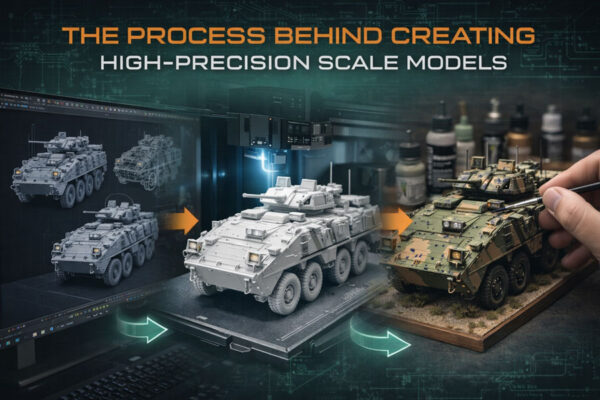
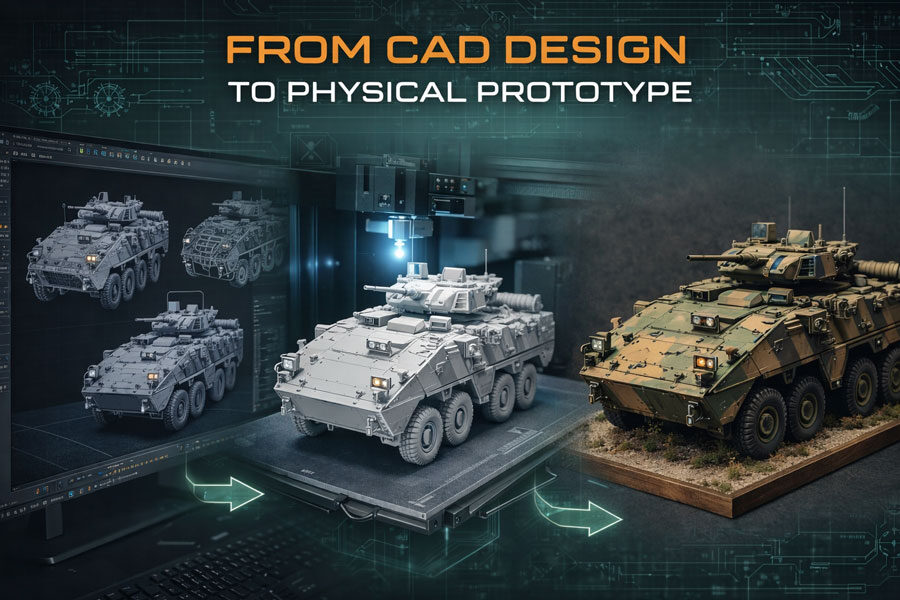
The journey from a CAD design to a physical prototype involves several stages, including digital modeling, design refinement, and advanced manufacturing processes such as 3D printing or CNC machining. This process helps ensure that the final product meets both functional and aesthetic requirements before entering full production.
Creating the Digital Design
The process begins with the creation of a digital model using CAD software. Designers carefully build the object in a virtual environment by defining its dimensions, shapes, and structural components.
During this stage, engineers can visualize the product from different angles and ensure that all parts are designed with accuracy. CAD also allows designers to test how components fit together, which helps prevent potential design issues before manufacturing begins.
This digital model becomes the blueprint for all further development stages.
Design Refinement and Optimization
Once the initial CAD model is completed, the design goes through a refinement stage. Designers analyze the model to improve functionality, structural stability, and manufacturing feasibility.
Adjustments may include improving certain dimensions, simplifying complex parts, or enhancing details that will be visible in the final product. This stage ensures that the design is not only visually accurate but also suitable for production.
Optimization at this stage reduces the risk of errors and ensures smoother manufacturing later on.
Preparing the Model for Manufacturing
Before the prototype can be produced, the CAD model must be prepared for manufacturing. This involves converting the design into a format compatible with production technologies such as 3D printing or CNC machining.
Engineers may also divide the model into multiple components to simplify the production process. Additional adjustments are sometimes made to improve printability, strength, or assembly efficiency.
This preparation step ensures that the digital model can be accurately transformed into a physical object.
Prototype Manufacturing
Once the design is ready, the model moves into the prototype manufacturing stage. Modern technologies such as 3D printing allow designers to quickly produce a physical version of the digital model.
This prototype allows engineers and designers to evaluate the product in real form. They can assess its size, structure, details, and overall design to ensure it meets expectations.
If improvements are required, the CAD design can be modified and a new prototype can be produced quickly.
Testing and Iteration
A prototype is rarely the final version of a product. Instead, it serves as a testing stage that helps identify areas for improvement.
Designers may test how parts fit together, how the structure performs, or how the product appears visually. Based on the results, adjustments can be made to the CAD model.
This iterative process helps refine the design and ensures that the final product is optimized for production.
Conclusion
The transition from CAD design to a physical prototype is an essential step in modern manufacturing and product development. By combining digital design tools with advanced production technologies, designers can transform ideas into tangible objects with remarkable speed and accuracy.
This process not only improves efficiency but also ensures that the final product meets high standards of quality, functionality, and precision.