
The Process Behind Creating High-Precision Scale Models
High-precision scale models are more than just miniature versions of real objects. They represent a careful combination of engineering knowledge, digital design, and advanced manufacturing techniques. Whether used for collectors, exhibitions, product visualization, or industrial purposes, scale models require a detailed and systematic development process.
From the initial concept to the final physical model, every step must be handled with precision to ensure the model accurately represents the original design.
Research and Reference Collection
The process of creating a high-precision scale model begins with research. Designers gather detailed references such as technical drawings, blueprints, photographs, and measurements of the original object.
This stage is extremely important because accurate reference materials allow designers to understand the structure, proportions, and details of the object they are recreating. The better the reference materials, the more accurate the final model will be.
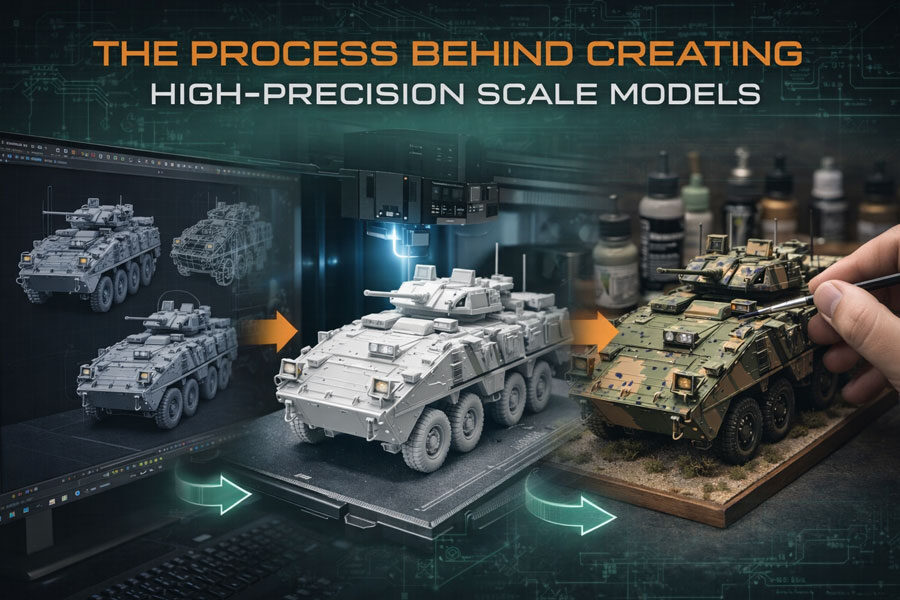
Digital 3D Modeling
After collecting references, the next step is building the model in a digital environment. Designers use specialized 3D modeling or CAD software to create a precise digital representation of the object.
During this stage, every component is carefully modeled to match the real structure. Fine details such as surface textures, panel lines, mechanical parts, and structural elements are added to ensure realism and accuracy.
The digital model acts as the blueprint for the entire production process.
Model Optimization and Preparation
Once the digital model is completed, it must be optimized for manufacturing. This step ensures that the model can be produced efficiently while maintaining its structural integrity and visual quality.
Designers may divide the model into multiple parts to simplify manufacturing and assembly. They also ensure that the model meets the technical requirements for production technologies such as 3D printing or machining.
Optimization helps reduce production errors and ensures that the final model can be assembled smoothly.
Prototype Production
Before full production begins, a prototype is usually created. This prototype allows designers to evaluate the model in physical form.
Using technologies like high-resolution 3D printing, the prototype can reveal potential issues such as structural weaknesses, surface imperfections, or design inaccuracies. If improvements are needed, adjustments can be made to the digital model.
This step helps refine the design before final manufacturing.
Final Production and Finishing
After the prototype has been approved, the model moves into the final production stage. Depending on the project, production may involve small batch manufacturing or custom model fabrication.
Once the model is produced, finishing processes such as cleaning, assembly, surface treatment, and painting may be applied to enhance its appearance and realism.
These final touches are essential for creating professional display models with a high level of craftsmanship.
Conclusion
Creating high-precision scale models requires a combination of detailed research, advanced digital modeling, and modern manufacturing techniques. Each stage of the process plays a crucial role in ensuring that the final model accurately represents the original object.
By integrating engineering precision with creative craftsmanship, manufacturers can produce scale models that meet the highest standards of detail, quality, and realism.